Design Thinking:
Creating new or modifying existing infrastructure can represent a sizable investment of time, material and cost. I will address a design process here that goes beyond the traditional one size fits all approach, and describe how design thinking can help in and outside the strict boundaries of architecture. In fact, design thinking provides a way to mitigate risk and enhance the overall opportunity.
In addition, I will discuss how design thinking is utilized at (ACS) Arc Castle Studio to create value and solve problems. This process combines the art with the science of putting a project together, and serves as the basis for developing a project understanding. I will start with some early history on how design thinking was used, and ask the question if we lost something along the way?
Design Thinking In History
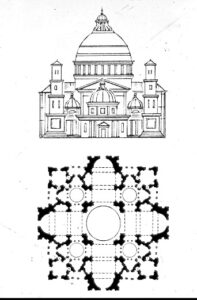
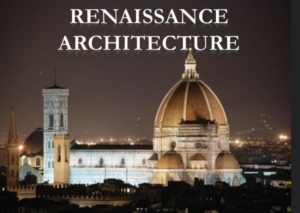
Design by it very nature was used throughout history. During the Renaissance period, architects, artist’s and sculptor’s alike, typically approached their work with simple tools like hand drawings, sketches, diagrams and even prototype models. But these simple tools produced profound results. Their approach also served as a basis for building their understanding, and being able to convey it to the client. Often, extensive research and practical knowledge was sought long before any design work occurred. Accordingly, this approach provided a way to establish important parameters by which the project could be designed upon.
Design thinking during the Renaissance influences science and art — across all disciplines. In architecture there is an emphasis on human-centric approaches to design. The work took on scientific approaches to build upon known information in order better develop solutions that put human beings front and center. In fact, the human body was seen a perfect model of proportion, form and exemplified an ideal relationship between its form and associated functions. This period, gave rise to a quality of design and work that changed the known world. Their new found approach created a culture of advancement, leaving the dark ages with a renewed vision.. But design was not just used in the Renaissance, I could argue it was used long before that and with even greater result, but this represents another discussion.
Why Design Thinking?:
It’s interesting to consider how design was utilized in history, and how it was utilized during the Renaissance period. It can be said that a design mindset was a common denominator for most any work of this period, Furthermore, utilizing this way of thinking does create value, and solve problems. Perhaps most importantly, it integrates a rational thinking and order to any project. However, it does come at a cost. I will acknowledge, that unless one applies the principles of good design and puts forth the hard work of its demanding search for excellence, the effort can become limited to just a skin deep beauty..
In fact, much of our built environment today does not incorporate design thinking. Yet, many examples in history can be analyzed, and represent amazing solutions, However, today we have tended to down play the design mindset — Perhaps this is why soo many of our cities, towns and homes do not function well. In our world, there is an emphasizes on quick gain and little thought for much anything. Design is seen as extravagant.
Design thinking like any tool, must be used wisely to shape, and form in a meaningful way, never arbitrarily. It must also be seen as valuable. This process represents a work that seeks authentic solutions and being true to its nature. This work also seeks to provide a healthy path. Good design will balance all the parts as they must interact and work well together. Although each project is different, we utilize lessons learned from them, In addition, a design thinking mindset produces a synergy that can and must be applied in many ways. This approach simply serves to connect many dots, and in the process enhances a journey to discovery..
How Design Thinking Can Be Utilized:
- A true architect can apply design thinking to serve as a platform for ideas and advance solutions that are healthy
- Aligns form with functional and builds upon program requirements that enhance the aesthetics
- Establish a 'solutions' based process (divergent and convergent thinking - art and science)
- Principle-centered approach in applying the necessary due diligence
- Seeks a human- focused solution, not assembly line thinking, or status quo objectives
- Evaluate form, function, program, site and aesthetics in a holistic way. (critical thinking)
- Risk mitigation, serves as guide and wise advisor to balancing project goals with meaningful objectives
- A Process that evaluates the big picture as well as the small.
- This is a unique human capability -- endless variety of solutions. This cannot be reduced to an algorithm
A Design Mindset:
Design thinking is not a formula, or a mathematical equation that can be applied to solve for an unknown. This represents a process that incorporates the art with the science. It’s a process that engages the needs of human beings with purpose.
Our process at Arc Castle Studio utilizes design thinking as a platform for problem solving.. We incorporate critical thinking into our tool kit . In fact, extraordinarily simple tools that were used long ago; like hand sketching, diagrams, mind maps, and study models. We explore all facets, to learn, discover, and seek diverse ways to improve our built environment.
Summary:
Design thinking has broad applications, and can serve to solve complex problems (in and out of architecture) and produce lasting value. Although this is not an easy process, it is a valuable way to approach a project. When done right, it’s never arbitrary. A good work can be discerned by observing how well its form is suited to its function, and utility — in fact, how the aesthetics is developed out of the intelligence harmony of all these factors. This represents the beginning of a design thinking process.
If you want to maximize your efforts to improve your project — utilize a design thinking mindset. Seeking to understand, learn how to change, and apply lessons learned through analysis. Never settle for the mediocrity of the status quo.